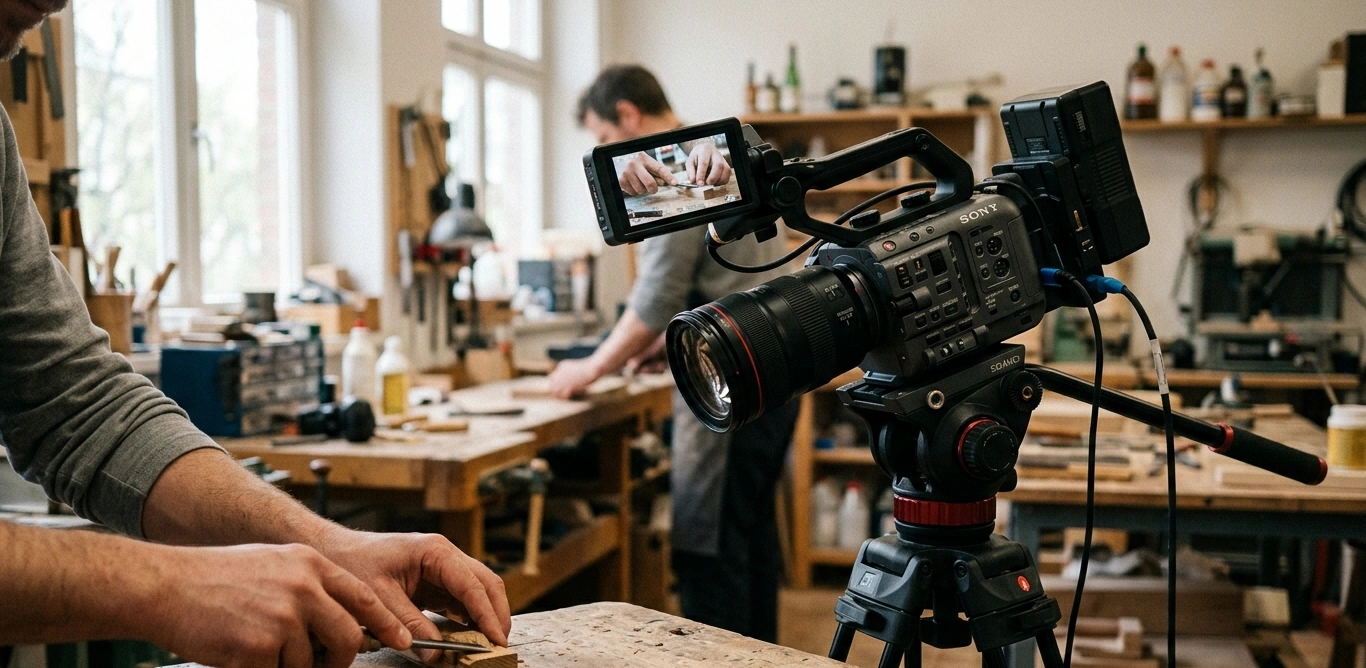
Video production is a multi-layered process. It involves more than just capturing a primary subject or central action. To create a strong visual story, producers need elements that keep the audience engaged. One of the most important elements is B-roll, which supports the main footage and strengthens the narrative. It may look secondary at first, but it plays a key role in visual storytelling and gives the video a professional finish.
Definition of B-Roll
B-roll refers to supplemental video footage that complements the primary footage of a project. It includes all shots that do not feature the main subject speaking directly to the camera or performing the central action.
In contrast, A-roll is the primary footage, such as interviews, main actions, or direct-to-camera content. While A-roll provides the core narrative, B-roll adds variety, depth, and visual interest, making the content more engaging.
Origin and Usage
The terms A-roll and B-roll originated during the era of physical film editing, when editors worked with separate reels of footage. B-roll was commonly used to cover cuts or transitions between different shots, helping to maintain visual continuity.
In modern filmmaking, journalism, and digital production, the term A-roll is used less frequently in practice, but B-roll remains a standard industry term. Today, it is widely used across various formats, including films, news reports, documentaries, and online videos.
Functions of B-Roll
B-roll serves several important functions in video production:
- Adding Visual Context: It provides supporting visuals that help explain or reinforce what is being discussed.
- Supporting Main Footage: It gives editors flexibility by acting as backup or supporting footage.
- Enhancing Storytelling: It adds depth, emotion, and a sense of place to the narrative.
- Maintaining Viewer Engagement: Variation in shots and angles keeps the content visually interesting.
- Covering Jump Cuts: It helps smooth edits and hide abrupt transitions, improving overall continuity.
Types of B-Roll
Different types of B-roll footage are used to enrich visual storytelling:
- Cutaway Shots: Shots that move away from the main subject to show related details.
- Establishing Shots: Wide shots used to introduce a location or setting.
- Reaction Shots: Shots showing responses, environment, or mood.
- Contextual Visuals: Footage of actions related to the topic, such as a person working or writing.
B-roll can also include stock footage, archival visuals, or drone shots, depending on the production needs.
Role in Storytelling
B-roll plays a key role in maintaining narrative flow and visual continuity. It helps bridge gaps between scenes, making transitions smoother and more natural. In scripted content, B-roll reinforces dialogue by visually supporting what is being said. In documentaries or interviews, it prevents monotony by avoiding long “talking head” shots and keeps the viewer engaged throughout.
Examples in Media Production
B-roll is widely used across different forms of media:
- News Reporting: A significant portion of news packages includes B-roll to provide visual context.
- Documentaries: Filmmakers rely on B-roll such as archival footage or environmental shots to support interviews.
- YouTube and Music Videos: Creators use B-roll to enhance storytelling and improve visual appeal.
- Feature Films and Sitcoms: B-roll is used for transitions, mood building, and reinforcing narrative elements.
Importance in Modern Digital Media
In today’s digital environment, B-roll has become essential for content creators, marketers, and media professionals. With the growth of social media and online video platforms, engaging visuals are crucial for audience retention.
Modern editing tools and AI-powered platforms make it easier to combine A-roll and B-roll into seamless visual narratives. As a result, even small creators and businesses can produce professional-quality videos. Ultimately, the effective use of B-roll is what transforms simple footage into engaging and professional content.
References
- Adobe. What is B-Roll? https://www.adobe.com/creativecloud/video/discover/b-roll.html
- StudioBinder. What is B-Roll in Film? https://www.studiobinder.com/blog/what-is-b-roll/Vimeo. The Basics of B-Roll
- https://vimeo.com/blog/post/the-basics-of-b-roll