
About Course
Build Stronger Theory. Develop Better Research Thinking.
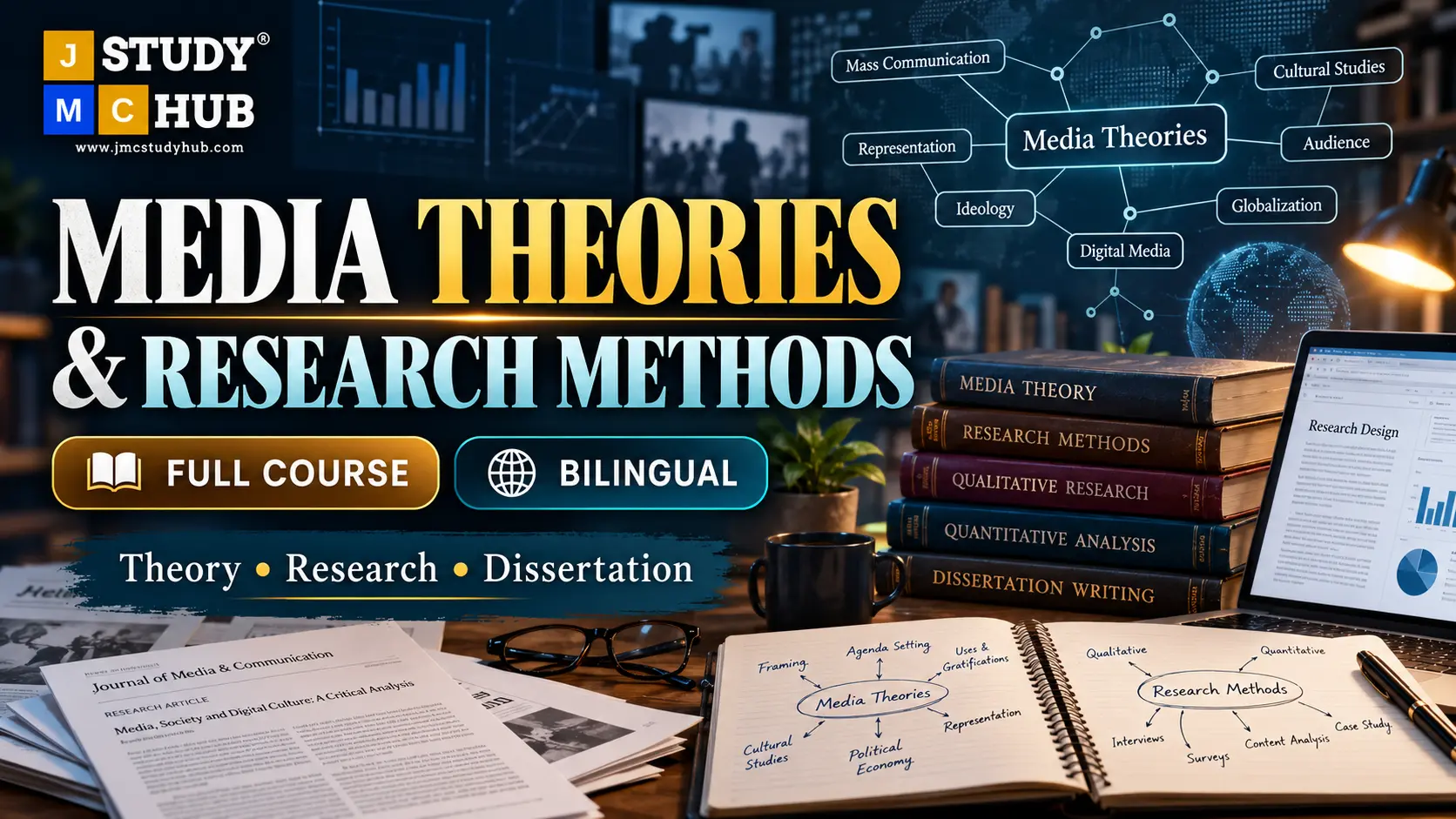
Understanding media theories is one thing; knowing how to connect them with meaningful academic research is another. This bilingual course is designed for research scholars, faculty members, academicians, and serious media researchers who want to strengthen both their theoretical foundation and research understanding.
The course brings together classical and contemporary media theories, communication perspectives, qualitative and quantitative research approaches, research design, literature review, sampling, data collection, analysis, and media-specific research applications within one structured learning journey. The syllabus also includes research applications across print, electronic, digital media, advertising and public relations. Syllabus_Media Theories and Res… Syllabus_Media Theories and Res…
From Theory to Research Application
Rather than studying theories and research methodology as separate areas, the course helps you understand how theoretical ideas can guide research questions, research design, interpretation, and media analysis.
Through Video Lectures, Study Materials, Practice Quizzes, Assignments and Reading Resources, you can strengthen conceptual understanding while developing a clearer approach to academic research.
The course also supports important research activities such as developing a research proposal and approaching a literature review, making it especially useful during dissertation or research preparation.
A Structured Academic Learning Experience
On the JMC Study Hub platform, you can move through lessons systematically, save notes, track your learning progress, review detailed quiz reports, access course resources, and post doubts or queries through your learning dashboard.
With 180-day access and under 20 hours of focused learning, you can study at your own pace and revisit important concepts whenever your research work requires them.
Whether you are refining your theoretical understanding, preparing a dissertation, developing a research proposal, or strengthening your academic foundation, this course helps you approach media research with greater clarity, structure, and confidence.
Understand the theory. Connect the research. Strengthen your academic work.
Course Content
Module I
-
03:28
-
Media Theory: Definition, Scope and Significance
-
L2. Historical Evolution of Media Theories
07:21 -
Historical Evolution of Mass Media Theories
-
L3. Normative Theories: Authoritarian, Libertarian, Social Responsibility, Soviet Media Theory
06:17 -
Normative Theories: Authoritarian, Libertarian, Social Responsibility, Soviet Media Theory
-
L4. Hypodermic Needle Theory: Assumptions and Critique
04:31 -
Hypodermic Needle Theory
-
L5. Two-Step Flow Theory: Influence of Opinion Leaders
03:41 -
Two-Step Flow Theory
-
L6. Frankfurt School: Adorno, Horkheimer, Marcuse
05:28 -
Frankfurt School and Critical Theory
-
L7. Cultural Studies: Stuart Hall, Encoding-Decoding Model
04:45 -
Cultural Studies and Encoding-Decoding
-
L8. Uses and Gratifications Theory
05:17 -
Uses and Gratifications Theory
-
L9. Reception Theory: Hall, Fiske and Active Audience
05:13 -
Reception Theory: Hall, Fiske and Active Audience
-
L10. Agenda-Setting Theory: McCombs and Shaw
03:25 -
Agenda-Setting Theory
-
L11. Framing Theory: Goffman and Media Narratives
05:39 -
Framing Theory
-
L12. Cultivation Theory: George Gerbner’s Long-Term Effects
04:59 -
Cultivation Theory
-
L13. Digital Media Theories: Network Society (Castells), Participatory Culture (Jenkins)
04:15 -
Digital Media Theories: Castells and Jenkins
-
L14. Application of Theories in Contemporary Media Research
04:29 -
Applications of Media Theories in Digital Research
-
L15. Comparative Analysis: Classical vs Contemporary Media Theories
05:40 -
Classical and Contemporary Media Theories
Module 2
Module 3
Module 4
Student Ratings & Reviews