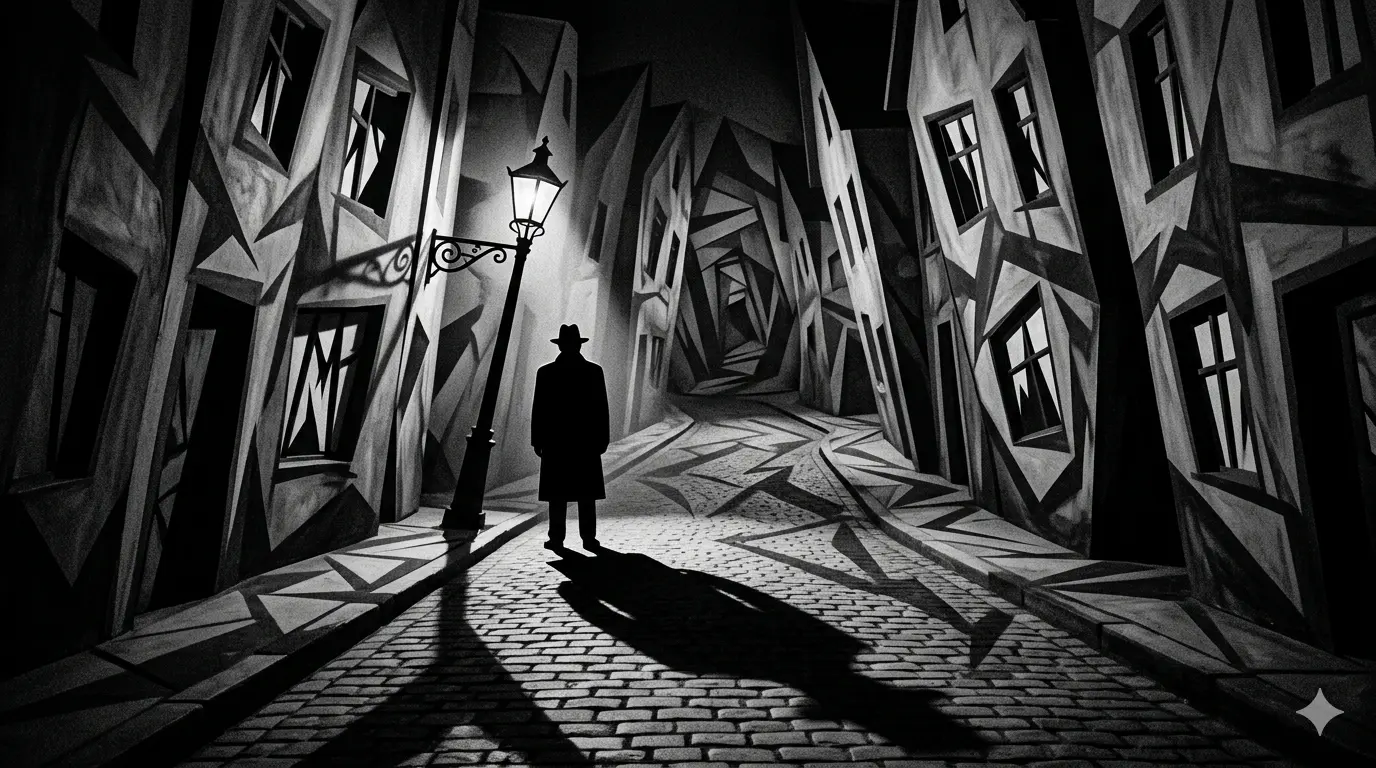


German Expressionism is one of the most significant artistic movements in early film history. Emerging in Germany during the early years of the Weimar Republic (1918–1933), the movement introduced a distinctive visual and narrative style that transformed cinema into a powerful medium of psychological and artistic expression. German Expressionist filmmakers rejected realistic representation and instead used distorted sets, dramatic lighting, stylized acting, and symbolic storytelling to express inner emotions and social anxieties.
Expressionism originally developed in painting, literature, and theatre in the early twentieth century. Artists associated with the movement believed that art should express internal emotional experiences rather than objectively represent the external world. When these artistic ideas entered cinema in the late 1910s and early 1920s, they reshaped the visual language of filmmaking and helped establish Germany as one of the most innovative film industries of the silent era.
Historical Background: Cinema in the Weimar Republi
The rise of German Expressionist cinema was closely connected to the social and political circumstances of post–World War I Germany. After Germany’s defeat in 1918, the country experienced severe economic hardship, political instability, and widespread social anxiety. The early years of the Weimar Republic were marked by unemployment, political conflicts, and the hyperinflation crisis of 1923, which deeply affected everyday life.
These difficult conditions influenced artists and filmmakers, who began exploring themes related to psychological instability, fear, authority, and social control. Rather than portraying reality in a conventional manner, filmmakers used visual symbolism and exaggerated imagery to represent the emotional and psychological condition of society. Another important factor in the development of German cinema was the establishment of Universum Film AG (UFA) in 1917. Founded with government support during World War I, UFA initially produced propaganda films but later became one of the most influential film studios in Europe. During the 1920s the studio provided resources, technical infrastructure, and creative opportunities that allowed filmmakers to experiment with innovative cinematic techniques and visual styles. This support helped Germany become an important center of film production during the silent era.
Characteristics of German Expressionist Cinema
German Expressionist films are widely recognized for their distinctive visual style and thematic depth. Instead of attempting to reproduce reality accurately, these films intentionally distorted visual elements in order to represent internal psychological experiences.
- One of the most notable features of expressionist cinema is the use of distorted and stylized sets. Buildings, streets, and interior spaces were often constructed with exaggerated shapes, sharp angles, and irregular perspectives. These unusual designs created dreamlike and unsettling environments that reflected the emotional state of the characters.
- Lighting also played a central role in the expressionist aesthetic. Filmmakers frequently used chiaroscuro lighting, a technique characterized by strong contrasts between light and shadow. Deep shadows, dramatic silhouettes, and angular lighting patterns created an atmosphere of tension, mystery, and psychological unease.
- Another important element was the use of highly stylized acting. Performers relied on exaggerated gestures, expressive body movements, and theatrical facial expressions rather than naturalistic performance. This acting style was influenced by expressionist theatre and stage performance traditions.
- Narratively, German Expressionist films often explored dark and complex themes such as madness, authoritarian power, betrayal, supernatural forces, and moral conflict. These themes reflected the uncertainty and emotional turmoil experienced by German society in the aftermath of the First World War.
Major Films of German Expressionism
Several films produced during the 1920s are widely considered defining examples of German Expressionist cinema.
- One of the most influential films of the movement is The Cabinet of Dr. Caligari (1920) directed by Robert Wiene. The film is famous for its painted backdrops, distorted architecture, and unconventional visual design. Many film scholars interpret the narrative as a political allegory about authority, manipulation, and social control.
- Another important film is Nosferatu (1922) directed by F. W. Murnau. Although it was an unauthorized adaptation of Bram Stoker’s Dracula, the film became one of the most influential works in horror cinema. Murnau combined expressionist visual techniques with atmospheric outdoor locations, creating a haunting and supernatural visual style.
- Metropolis (1927) directed by Fritz Lang is another major film associated with the expressionist tradition. The film presents a futuristic industrial city divided between wealthy elites and oppressed workers. Through monumental architecture and powerful visual symbolism, Lang explores themes of industrialization, technological power, and class conflict.
- Another significant film is The Last Laugh (1924) directed by F. W. Murnau. This film is particularly important for its technical innovation known as the “unchained camera”, which allowed the camera to move freely rather than remaining fixed in a static position. This technique helped convey the emotional experiences of the protagonist.
- Similarly, From Morn to Midnight (1920) directed by Karlheinz Martin is often described as one of the most purely expressionist films. Its abstract sets, stylized lighting, and experimental visual design demonstrate the extreme aesthetic possibilities of expressionist cinema.
Major Directors of the Movement
The development of German Expressionist cinema was shaped by several influential filmmakers who experimented with visual storytelling and artistic innovation.
- Robert Wiene played a central role in defining the movement’s style through The Cabinet of Dr. Caligari. His work demonstrated how set design and visual composition could function as powerful narrative tools.
- F. W. Murnau brought artistic sophistication and technical innovation to German cinema. With a background in art history and theatre, he combined expressionist visual aesthetics with advanced cinematography and symbolic storytelling.
- Fritz Lang expanded the movement’s scope by integrating philosophical and social themes into his films. His works frequently explored issues such as industrialization, technological power, crime, and moral conflict.
- Other important contributors include Karlheinz Martin, who adapted expressionist stage drama for cinema, and Arthur Robison, whose film Schatten (Warning Shadows, 1923) used shadow imagery and visual symbolism as central narrative devices.
Visual Style and Cinematic Techniques
German Expressionist filmmakers introduced several cinematic innovations that influenced later developments in world cinema. Visual composition was considered more important than realistic representation. Every element within the frame—including set design, lighting, costume, and actor movement—was arranged carefully to convey symbolic meaning.
- Early expressionist films relied heavily on controlled studio environments, where filmmakers could design artificial sets and manipulate lighting conditions precisely. Painted backdrops and constructed spaces allowed directors to create exaggerated perspectives and striking visual compositions.
- Later developments included mobile camera movement, experimental editing, and dynamic framing. These innovations helped filmmakers represent psychological states and emotional experiences more effectively.
- Narrative techniques also evolved during this period. Some expressionist films employed flashbacks, dream sequences, and subjective perspectives, which blurred the boundaries between reality and imagination and intensified the emotional impact of the narrative.
Influence on World Cinema
The influence of German Expressionism extended far beyond the silent film era. During the 1930s many German filmmakers emigrated to the United States due to the rise of the Nazi regime. As a result, expressionist visual techniques strongly influenced Hollywood filmmaking.
- One of the most significant areas of influence was film noir, a genre known for its dark visual style, dramatic shadows, and morally ambiguous characters. The lighting techniques and psychological themes of film noir clearly reflect the legacy of German Expressionist cinema.
- The movement also influenced the development of horror cinema, particularly the early Universal horror films of the 1930s such as Dracula (1931) and Frankenstein (1931).
- Even in contemporary cinema the influence of German Expressionism remains visible. Directors such as Tim Burton frequently use exaggerated architecture, stylized visual design, and gothic atmospheres reminiscent of expressionist cinema. Similarly, filmmakers such as Robert Eggers and Lars von Trier explore psychological storytelling and symbolic imagery that reflect expressionist traditions.
Conclusion
German Expressionism represents one of the most innovative and influential movements in the history of cinema. Emerging from the political instability and psychological trauma of post–World War I Germany, the movement introduced a distinctive visual language that emphasized emotional expression over realistic representation. Through distorted sets, dramatic lighting, stylized performances, and experimental narrative techniques, German Expressionist filmmakers created a cinematic style that reflected the anxieties and philosophical concerns of their time. More importantly, the movement established artistic and technical foundations that later influenced film genres such as horror and film noir.