
Lesson 5: Major Landmarks in Print Media in Indian Languages
The history of print media in Indian languages is a testament to the country’s rich cultural and linguistic diversity. Print media played a pivotal role in shaping modern India, from promoting regional languages to fostering social and political awareness. This lesson explores the major landmarks in the evolution of print media in Indian languages, emphasizing its growth, influence, and resilience over time.
The Beginnings of Regional Language Print Media in India
The development of print media in Indian languages began in the early 19th century, primarily driven by Christian missionaries and social reformers. They used print media as a tool to spread religious teachings, social reforms, and education in regional languages.
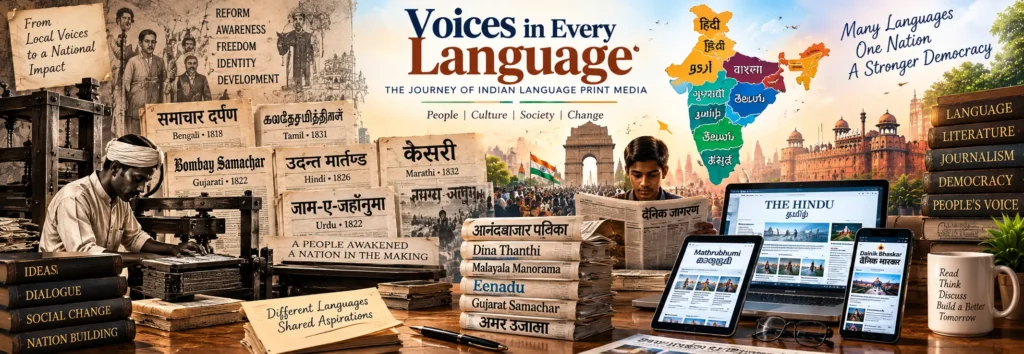
- Bengali (1818): The first regional language newspaper, Samachar Darpan, was published by the Serampore Missionaries. It focused on spreading social and educational awareness.
- Tamil (1831): Tamil Nadu’s Swadesamitran was one of the earliest Tamil newspapers, promoting social reforms and language preservation.
- Gujarati (1822): Bombay Samachar, founded by Fardunjee Marzban, is the oldest continuously published newspaper in India. It played a key role in promoting business and commerce.
- Hindi (1826): Udant Martand was the first Hindi newspaper, reflecting the growing importance of Hindi in nationalistic movements.
- Marathi (1832): Kesari, launched by Bal Gangadhar Tilak, focused on political awakening and freedom struggle.
- Urdu (1822): Jam-e-Jahan Numa was the first Urdu newspaper, reflecting the linguistic and cultural identity of Urdu speakers.
These early newspapers established the foundation for regional journalism and reflected India’s linguistic and cultural plurality.
Landmarks During the Freedom Struggle
The freedom struggle saw print media in Indian languages emerge as powerful tools for mobilizing masses and spreading nationalist ideologies. Newspapers became voices of dissent against British rule.
- Kesari (1881) and Mahratta (1881): Both were published by Bal Gangadhar Tilak in Marathi and English, respectively. These newspapers challenged colonial rule and became platforms for political debates.
- Amrita Bazar Patrika (1868): Initially a Bengali newspaper, it later switched to English to evade British censorship while continuing to advocate freedom.
- Swadesamitran (1891): Focused on Tamil nationalism and reforms.
- Bengalee (1879): Edited by Surendranath Banerjee, it voiced opposition to British policies.
- Al-Hilal (1912): Published in Urdu by Maulana Abul Kalam Azad, it promoted Hindu-Muslim unity and anti-colonial sentiments.
These publications were often banned or censored, but their persistence reflected the press’s role in fueling India’s freedom movement.
| Law / Regulation | Year | Main Effect on the Press | Recall Add-on |
|---|---|---|---|
| Licensing Regulations | 1823 | Required publishers to obtain a government licence; strongly restricted independent Indian journalism. | 1823 → Licence before publication |
| Metcalfe Act | 1835 | Relaxed earlier licensing restrictions and required declaration of the printer and publisher. | Metcalfe → Liberalisation of the press |
| Press and Registration of Books Act | 1867 | Established a formal system for declaration and registration of printing presses and publications. | 1867 → Registration & record |
| Vernacular Press Act | 1878 | Targeted Indian-language newspapers and gave colonial authorities wide powers against publications considered seditious. | 1878 → Vernacular press under direct pressure |
| Indian Press Act | 1910 | Enabled authorities to demand security deposits and act against publications carrying material regarded as inflammatory or seditious. | 1910 → Security deposit + seizure powers |
Growth of Regional Language Newspapers Post-Independence
After independence, regional newspapers shifted their focus from freedom movements to nation-building, literacy, and socio-economic development.
- Hindi Newspapers:
- Dainik Jagran (1942): Became the most widely read Hindi daily, focusing on national news and cultural issues.
- Navbharat Times (1946): Emphasized urban development and governance.
- Bengali Newspapers:
- Anandabazar Patrika (1922): Focused on cultural and political reforms, maintaining its dominance in West Bengal.
- Bartaman (1984): Provided contemporary news and literary content.
- Tamil Newspapers:
- Dina Thanthi (1942): Became one of the largest circulated Tamil newspapers, focusing on common people’s issues.
- Dinamalar (1951): Highlighted agricultural developments and education.
- Malayalam Newspapers:
- Malayala Manorama (1888): Focused on literature, culture, and politics, becoming a major influence in Kerala.
- Mathrubhumi (1923): Supported freedom movements and later emphasized Kerala’s socio-economic progress.
- Telugu Newspapers:
- Eenadu (1974): Focused on Andhra Pradesh’s regional issues and culture.
- Andhra Jyothi (1960): Addressed political and economic developments.
- Gujarati Newspapers:
- Gujarat Samachar (1932): Highlighted trade, commerce, and cultural aspects.
- Sandesh (1923): Promoted business and political awareness.
Regional language newspapers continued to expand their readership, catering to linguistic and cultural identities while adapting to modern demands.
| Organisation | Year | Main Role | Memory Cue |
|---|---|---|---|
| Indian & Eastern Newspaper Society (IENS) | 1939 | Created as a central body to protect and promote the common business interests of newspaper proprietors. | Publishers → Common business interests |
| All-India Newspaper Editors’ Conference (AINEC) | 1940 | Brought newspaper editors together on issues related to editorial freedom, censorship and professional concerns. | Editors → Editorial freedom |
| Indian Language Newspapers Association (ILNA) | 1941 | Formed to address the distinct problems and interests of newspapers published in Indian languages. | Language Press → Special representation |
| Advertising Agencies Association of India (AAAI) | 1945 | Represented advertising agencies and helped professionalise relations between advertisers, agencies and media organisations. | Advertising agencies → Professional standards |
| Indian Newspaper Society (INS) | Present name adopted later | Successor identity of IENS; continues to represent newspaper and periodical publishers in India. | IENS → INS |
Technological Advancements and Modernization
With the advent of offset printing and digital publishing, regional newspapers modernized their formats, improving accessibility and appeal.
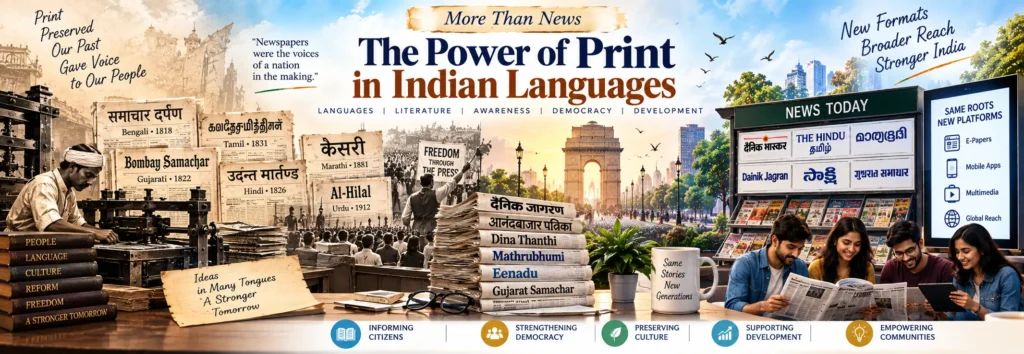
- Online Editions: Newspapers like Dainik Bhaskar, The Hindu Tamil, and Malayala Manorama launched digital platforms to cater to younger audiences.
- Mobile Apps and E-Papers: Enabled real-time updates, integrating multimedia content and interactive features.
- Customization and Localization: Personalized content targeting specific regions and languages expanded reach and relevance.
These advancements ensured regional newspapers remained competitive and adapted to the evolving media landscape.
Role of Regional Newspapers in Modern India
Regional language newspapers continue to play a crucial role in modern India:
- Promoting Literacy: Newspapers in vernacular languages improve reading habits and awareness among rural populations.
- Preserving Culture: They act as custodians of local traditions, languages, and art forms.
- Political Mobilization: Regional newspapers highlight local governance issues, giving voice to regional aspirations.
- Economic Growth: They promote local businesses and industries through targeted advertising.
- Disaster Management and Crisis Communication: Serve as reliable sources of information during emergencies, such as floods, cyclones, or pandemics.
Challenges Faced by Regional Newspapers
Despite their reach and influence, regional newspapers face several challenges:
- Competition from Digital Media: Younger audiences prefer social media and digital platforms over print.
- Language Barriers: Limited translations restrict readership beyond specific linguistic groups.
- Financial Constraints: Dependence on advertisements often affects editorial independence.
- Misinformation: Fact-checking resources are limited in regional languages, risking the spread of fake news.
Conclusion
The evolution of print media in Indian languages highlights its role in shaping India’s identity, culture, and democracy. From early missionary efforts to modern digital formats, regional newspapers have adapted and thrived, preserving linguistic heritage while addressing contemporary issues. As we move forward, regional newspapers must continue to innovate and uphold their responsibility as the voice of local communities.
Next Lesson – Major Landmarks in Electronic Media in Indian Languages.
पाठ 5: भारतीय भाषाओं में प्रिंट मीडिया के प्रमुख ऐतिहासिक पड़ाव
परिचय
भारतीय भाषाओं में प्रिंट मीडिया का इतिहास देश की सांस्कृतिक तथा भाषाई विविधता का सशक्त प्रमाण है। प्रिंट मीडिया ने आधुनिक भारत के निर्माण में महत्वपूर्ण भूमिका निभाई है। क्षेत्रीय भाषाओं के संवर्धन, सामाजिक सुधार तथा राजनीतिक जागरूकता के प्रसार में इसकी विशेष भूमिका रही है। इस पाठ में भारतीय भाषाओं में प्रिंट मीडिया के विकास के प्रमुख ऐतिहासिक चरणों, उसके प्रभाव तथा समय के साथ उसकी सुदृढ़ता का विश्लेषण प्रस्तुत किया गया है।
भारत में क्षेत्रीय भाषा प्रिंट मीडिया की शुरुआत
भारतीय भाषाओं में प्रिंट मीडिया का विकास उन्नीसवीं सदी के प्रारंभ में हुआ। इसका नेतृत्व ईसाई मिशनरियों और सामाजिक सुधारकों ने किया, जिन्होंने धार्मिक शिक्षाओं, सामाजिक सुधारों तथा शिक्षा के प्रसार हेतु क्षेत्रीय भाषाओं में समाचार पत्र प्रकाशित किए।
बांग्ला में 1818 में ‘समाचार दर्पण’ का प्रकाशन सेरामपुर मिशनरियों द्वारा किया गया, जिसका उद्देश्य सामाजिक और शैक्षिक जागरूकता फैलाना था। गुजराती में 1822 में ‘बॉम्बे समाचार’ की स्थापना फरदूनजी मर्जबान ने की, जो भारत का सबसे पुराना निरंतर प्रकाशित समाचार पत्र है और जिसने व्यापार तथा वाणिज्य को बढ़ावा दिया। उर्दू में 1822 में ‘जाम-ए-जहान नुमा’ प्रकाशित हुआ, जिसने उर्दू भाषी समाज की सांस्कृतिक पहचान को अभिव्यक्ति दी। हिंदी में 1826 में ‘उदंत मार्तंड’ का प्रकाशन हुआ, जिसने हिंदी पत्रकारिता की आधारशिला रखी। तमिल में 1831 में ‘स्वदेशमित्रन’ का प्रकाशन हुआ, जिसने सामाजिक सुधारों और भाषा संरक्षण को प्रोत्साहन दिया। मराठी में ‘केसरी’ का प्रकाशन 1881 में बाल गंगाधर तिलक द्वारा किया गया, जो राजनीतिक जागरूकता और स्वतंत्रता संग्राम से संबद्ध था।
इन प्रारंभिक समाचार पत्रों ने क्षेत्रीय पत्रकारिता की नींव रखी और भारत की भाषाई तथा सांस्कृतिक विविधता को सशक्त अभिव्यक्ति प्रदान की।
स्वतंत्रता संग्राम के दौरान प्रमुख पड़ाव
स्वतंत्रता संग्राम के दौरान भारतीय भाषाओं के समाचार पत्र राष्ट्रवादी विचारधारा के प्रसार और जनमत निर्माण के प्रभावी माध्यम बने। इन्होंने ब्रिटिश शासन के विरोध में जनता को संगठित किया और राजनीतिक चेतना का विस्तार किया।
‘केसरी’ और ‘मराठा’ का प्रकाशन 1881 में बाल गंगाधर तिलक द्वारा किया गया। ‘केसरी’ मराठी में तथा ‘मराठा’ अंग्रेज़ी में प्रकाशित होता था। इन पत्रों ने औपनिवेशिक शासन की नीतियों की आलोचना की और राजनीतिक बहसों को दिशा दी। ‘अमृत बाजार पत्रिका’ का प्रकाशन 1868 में आरंभ हुआ। प्रारंभ में यह बांग्ला में प्रकाशित होती थी, किंतु ब्रिटिश सेंसरशिप से बचने हेतु इसे अंग्रेज़ी में प्रकाशित किया जाने लगा। ‘द बंगाली’ का संपादन 1879 में सुरेंद्रनाथ बनर्जी द्वारा किया गया, जो ब्रिटिश नीतियों के विरोध के लिए प्रसिद्ध था। ‘अल-हिलाल’ का प्रकाशन 1912 में मौलाना अबुल कलाम आज़ाद ने उर्दू में किया, जिसने हिंदू-मुस्लिम एकता और राष्ट्रवादी विचारों को प्रोत्साहित किया।
इन प्रकाशनों को अनेक बार प्रतिबंध और सेंसरशिप का सामना करना पड़ा, फिर भी इन्होंने स्वतंत्रता आंदोलन में महत्वपूर्ण भूमिका निभाई।
स्वतंत्रता के बाद क्षेत्रीय भाषा समाचार पत्रों का विकास
स्वतंत्रता प्राप्ति के पश्चात क्षेत्रीय भाषा समाचार पत्रों ने राष्ट्र निर्माण, साक्षरता तथा सामाजिक-आर्थिक विकास को प्राथमिकता दी। हिंदी में ‘दैनिक जागरण’ (1942) और ‘नवभारत टाइम्स’ (1946) ने राष्ट्रीय तथा शहरी विषयों को प्रमुखता दी। बंगाली में ‘आनंदबाजार पत्रिका’ (1922) और ‘बरतमान’ (1984) ने सांस्कृतिक तथा समकालीन विषयों को स्थान दिया। तमिल में ‘दिन थंथि’ (1942) और ‘दीनामलर’ (1951) ने जनसामान्य के मुद्दों तथा शिक्षा और कृषि संबंधी विषयों को प्रमुखता दी। मलयालम में ‘मलयाला मनोरमा’ (1888) और ‘मातृभूमि’ (1923) ने साहित्य, राजनीति तथा सामाजिक विकास पर ध्यान केंद्रित किया। तेलुगु में ‘ईनाडु’ (1974) और ‘आंध्र ज्योति’ (1960) ने क्षेत्रीय मुद्दों तथा राजनीतिक विकास को प्रमुखता दी। गुजराती में ‘गुजरात समाचार’ (1932) और ‘संदेश’ (1923) ने व्यापार, वाणिज्य तथा राजनीतिक विषयों को व्यापक रूप से उजागर किया।
इन समाचार पत्रों ने भाषाई पहचान को बनाए रखते हुए समयानुकूल परिवर्तन किए और अपने पाठक वर्ग का विस्तार किया।
प्रौद्योगिकीय प्रगति और आधुनिकीकरण
ऑफसेट प्रिंटिंग तथा डिजिटल पब्लिशिंग के विकास से क्षेत्रीय समाचार पत्रों के स्वरूप में परिवर्तन आया। ऑनलाइन संस्करण, ई-पेपर और मोबाइल एप्लिकेशन के माध्यम से इनकी पहुँच में विस्तार हुआ। डिजिटल प्लेटफॉर्म्स ने युवा पाठकों को आकर्षित किया तथा मल्टीमीडिया और इंटरएक्टिव सामग्री को संभव बनाया। स्थानीयकरण और व्यक्तिकरण की प्रवृत्ति ने विशेष क्षेत्रों और समुदायों के लिए प्रासंगिक सामग्री उपलब्ध कराई।
आधुनिक भारत में क्षेत्रीय समाचार पत्रों की भूमिका
क्षेत्रीय समाचार पत्र साक्षरता के प्रसार में सहायक हैं और ग्रामीण क्षेत्रों में पढ़ने की आदत को प्रोत्साहित करते हैं। ये स्थानीय संस्कृति, परंपराओं और भाषाओं के संरक्षण में योगदान देते हैं। स्थानीय शासन और क्षेत्रीय मुद्दों को उजागर कर राजनीतिक जागरूकता को सुदृढ़ करते हैं। विज्ञापनों के माध्यम से स्थानीय व्यापार और उद्योगों को बढ़ावा देते हैं तथा आपदा और संकट की स्थितियों में विश्वसनीय सूचना स्रोत के रूप में कार्य करते हैं।
क्षेत्रीय समाचार पत्रों के समक्ष चुनौतियाँ
डिजिटल मीडिया की बढ़ती लोकप्रियता के कारण प्रिंट मीडिया को प्रतिस्पर्धा का सामना करना पड़ रहा है। भाषाई सीमाओं के कारण समाचार पत्र विशिष्ट समुदायों तक सीमित रह जाते हैं। विज्ञापन आधारित आय मॉडल कई बार संपादकीय स्वतंत्रता को प्रभावित करता है। तथ्य-जांच संसाधनों की कमी के कारण क्षेत्रीय भाषाओं में भ्रामक सूचना के प्रसार का जोखिम बना रहता है।
निष्कर्ष
भारतीय भाषाओं में प्रिंट मीडिया का विकास देश की लोकतांत्रिक संरचना और सांस्कृतिक पहचान के निर्माण में महत्वपूर्ण रहा है। प्रारंभिक मिशनरी प्रयासों से लेकर आधुनिक डिजिटल रूपांतरण तक, क्षेत्रीय समाचार पत्रों ने निरंतर परिवर्तन को स्वीकार किया है। भाषाई विरासत के संरक्षण और समसामयिक मुद्दों की अभिव्यक्ति में इनकी भूमिका आज भी प्रासंगिक है।
Quick Revise (Exam Point of View)
|
विषय |
प्रमुख तथ्य |
वर्ष |
|
प्रथम बांग्ला पत्र |
समाचार दर्पण |
1818 |
|
प्रथम हिंदी पत्र |
उदंत मार्तंड |
1826 |
|
केसरी और मराठा |
बाल गंगाधर तिलक द्वारा प्रकाशन |
1881 |
|
अल-हिलाल |
मौलाना अबुल कलाम आज़ाद |
1912 |
|
डिजिटल विस्तार |
ऑनलाइन संस्करण, ई-पेपर, मोबाइल ऐप |
समकालीन काल |