


Introduction: Looking Beyond What We See on Screen
Why do viewers feel deeply immersed in films, even when they are aware that what they are watching is fictional? Why does cinema appear so natural and real, despite being carefully constructed?
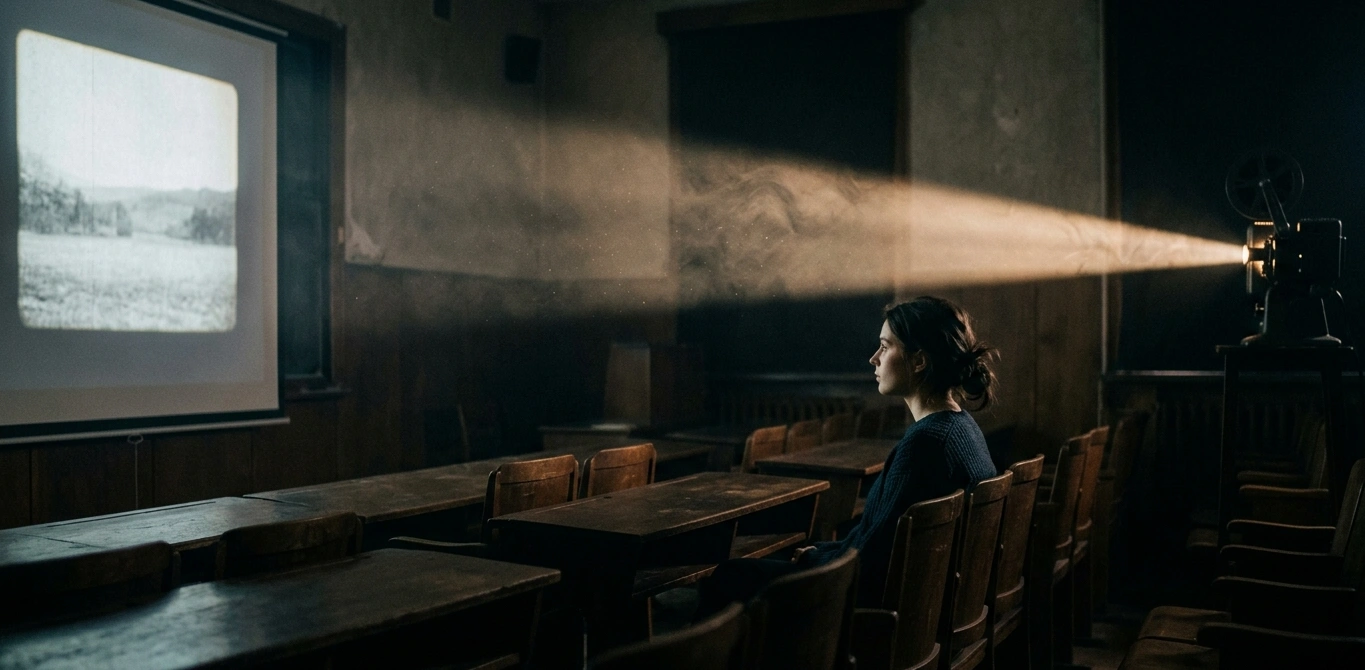
When we watch a film, it often feels like we are simply observing a story unfolding in front of us. The characters seem real, the world appears believable, and the experience feels natural. However, film theorists argue that this experience is far from neutral. What we see and how we interpret it are carefully shaped by the medium itself.
Apparatus Theory is one of the most important frameworks in film studies that helps us understand this hidden process. Rather than focusing only on the story or content of a film, the theory examines the entire system through which cinema operates. It explores how technical devices, viewing conditions, and psychological processes work together to influence the audience.
What is Apparatus Theory in Film?
The term “apparatus” refers to more than just physical equipment. It includes a complete system that shapes how films are produced, presented, and perceived. This system can be understood through three interconnected components:
1. Technical Apparatus
This includes all the physical tools involved in filmmaking and projection—such as cameras, lighting, editing systems, projectors, and screens. The camera functions as an invisible mediator that structures perception while appearing neutral.
2. Psychological Apparatus
This refers to the mental processes of the viewer, including perception, imagination, emotional response, and identification. The viewer actively engages with the film, often at an unconscious level.
3. Ideological Apparatus
Films are created within a social and cultural context and carry values, beliefs, and assumptions that reflect dominant ideology. The apparatus positions the spectator ideologically, aligning them with particular ways of seeing and understanding the world.
Together, these components form the cinematic apparatus—a system that not only presents images but also guides how those images are interpreted.
Historical Background: The Emergence of Apparatus Theory
Apparatus Theory developed in 1970s France, a time when film studies was undergoing major intellectual transformation. This period was influenced by the political and cultural shifts that followed the May 1968 movements, which encouraged scholars to question structures of power, authority, and representation. Film theorists began to move beyond narrative analysis and instead focused on how cinema functions as a system within society. They were particularly interested in how films contribute to the reproduction of dominant ideologies.
The theory draws heavily from two major intellectual traditions:
- Marxism, which views media as a tool that supports and reproduces dominant social and economic structures
- Psychoanalysis, especially the work of Freud and Lacan, which helps explain how viewers mentally engage with images and identify with what they see.
It is theoretically aligned with Louis Althusser’s concept of the Ideological State Apparatus (ISA), which explains how institutions like media function to reproduce dominant ideology (Althusser, 1971). By combining these perspectives, Apparatus Theory offers a way of understanding cinema not just as art or entertainment, but as a powerful ideological and psychological system.
Key Theorists and Their Contributions
Jean-Louis Baudry
Jean-Louis Baudry is one of the foundational thinkers of Apparatus Theory. He argued that the cinematic apparatus—particularly the camera and projection system—creates a powerful illusion of continuity and reality. This illusion positions the viewer in a specific way, making them feel as if they are observing reality naturally, when in fact they are engaging with a constructed image (Baudry, 1975). Baudry compared the cinematic experience to a dream-like state in a darkened theatre, where immersion reduces critical awareness and strengthens the illusion of reality. He emphasized that this process operates at an unconscious level, making its ideological effects even more powerful.
Christian Metz
Christian Metz extended these ideas by focusing on the psychological engagement of the viewer. He described cinema as a system of signification based on absence, where the viewer perceives a reality that is not physically present (Metz, 1974). Metz argued that viewers identify not only with characters but also with the camera’s perspective. This identification creates a strong sense of presence and involvement, drawing the audience deeply into the cinematic experience.
Core Concepts of Apparatus Theory
1. Spectatorship is Constructed
The viewer’s experience is not natural or independent. The cinematic system positions the spectator and guides perception.
2. Illusion of Reality
Cinema creates a powerful impression of reality through techniques such as continuity editing, framing, and camera movement. However, this reality is carefully constructed.
3. Identification with the Camera
Viewers often identify with the camera’s point of view, seeing the filmic world through a controlled and guided perspective.
4. Ideological Influence
Films reflect and reinforce dominant beliefs, values, and power structures, often at an unconscious level.
Spectatorship, Suture and Ideology: How the Viewer is Positioned
One of the central ideas in Apparatus Theory is that the viewer is positioned by the cinematic system. This positioning occurs through both technical and psychological processes.
When watching a film, the spectator:
- Adopts the perspective of the camera
- Experiences immersion and presence
- Identifies with characters and narratives
- Accepts the film’s version of reality
Suture Theory, closely related to Apparatus Theory, explains how cinematic techniques conceal the presence of the camera and integrate the viewer into the narrative. Through editing, framing, and perspective, the viewer is “stitched” into the film’s world. As a result, ideological meanings are transmitted effectively because the viewer is already aligned with the film’s perspective.
Examples of Apparatus Theory in Cinema
1. Classical Hollywood Cinema
Hollywood films use continuity editing, close-ups, and smooth narrative structures to create a seamless and natural viewing experience.
2. Alfred Hitchcock’s Films
In films like Rear Window, Hitchcock uses point-of-view shots to position the audience within the protagonist’s perspective, strengthening identification.
3. Propaganda Films
Cinema has historically been used to shape public opinion, as seen in films from Nazi Germany and the Soviet Union.
4. IMAX and 3D Technologies
Modern immersive technologies such as IMAX and 3D intensify spectator immersion, extending the logic of the cinematic apparatus in new technological forms.
Criticism of Apparatus Theory
Despite its influence, Apparatus Theory has faced several criticisms:
- It assumes that audiences are passive and easily influenced
- It does not fully account for diverse interpretations by viewers
- It overlooks the role of social background, culture, and personal experience
Feminist theorists also criticized the theory for ignoring gendered spectatorship, leading to important concepts such as the Male Gaze (Mulvey, 1975). Cultural studies scholars further argue that audiences are active participants who can interpret, negotiate, or even resist media messages.
Contemporary Relevance in the Digital Age
Although developed in the 1970s, Apparatus Theory remains highly relevant in today’s media environment.
- Virtual Reality (VR) creates immersive experiences where viewers are placed directly within the narrative
- OTT platforms promote continuous and immersive viewing habits
- Social media algorithms guide attention, visibility, and interpretation
These developments demonstrate that while technologies have evolved, the fundamental logic of the apparatus continues to shape audience perception.
Conclusion
Apparatus Theory provides a powerful framework for understanding cinema as more than storytelling. It reveals how films function as systems that shape perception, construct reality, and transmit ideology. By examining the relationship between technology, psychology, and ideology, the theory enables viewers to become more critical and aware.
References
- Baudry, J. L. (1975). The apparatus: Metapsychological approaches to the impression of reality in cinema.
- Althusser, L. (1971). Ideology and ideological state apparatuses.
- Mulvey, L. (1975). Visual pleasure and narrative cinema.