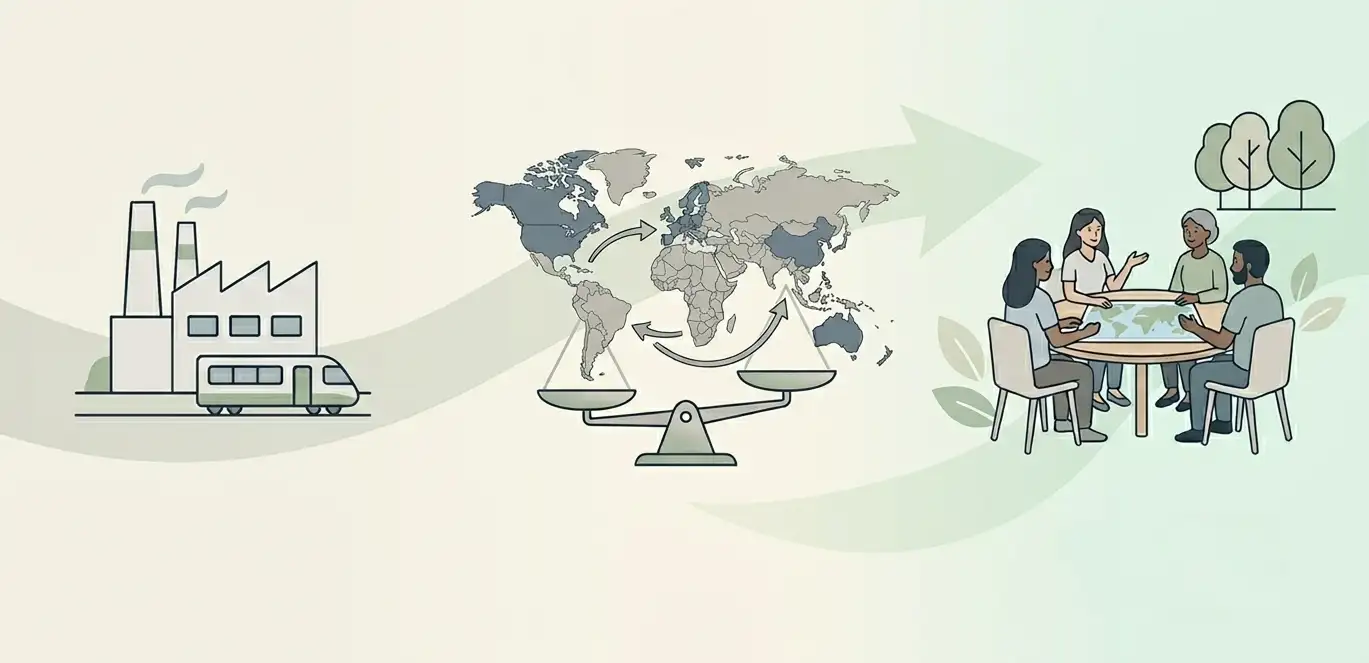
Development is not a one-dimensional concept limited to economic growth. In the early post–World War II period, development was measured mainly through indicators such as Gross National Product (GNP). Over time, this narrow view changed. Scholars like Amartya Sen expanded the meaning of development by linking it to human well-being. This includes education, health, and freedom of choice. As a result, development is now understood as a multidimensional process that involves social, cultural, and political transformation.
In communication studies, this broader understanding is explained through the major paradigms of development. These paradigms act as frameworks that help us understand how societies grow and how communication supports that process. At the same time, they reflect changing global realities and different approaches to solving underdevelopment.
A key figure in this field is Everett M. Rogers. His work laid the foundation for development communication. His famous book Diffusion of Innovations (1962) explains how new ideas and technologies spread within a society. Rogers showed that development is not only about introducing innovations. It also depends on how people understand, evaluate, and adopt them in their social context. Therefore, his work connects closely with development paradigms.
Meaning of Development Paradigms
A development paradigm refers to a dominant way of thinking about development during a specific period. It shapes how development problems are defined and how solutions are designed. In other words, it guides policies, communication strategies, and development practices. In development communication, three major paradigms are commonly discussed: modernization, dependency, and participatory paradigms. Each of these offers a different view of development and the role of communication.
Modernization Paradigm (Dominant Paradigm)
The modernization paradigm became popular after World War II. It views development as a linear process. According to this approach, developing countries can progress by following the path of Western nations. Industrialization, urbanization, and technological advancement are seen as key indicators.
In this model, communication plays a top-down role. Mass media such as radio, television, and newspapers are used to spread information and promote modern ideas. People are expected to adopt new practices without much questioning. As a result, the audience is treated as passive.
However, this approach has clear limitations. It ignores cultural diversity and assumes that one model fits all societies. Moreover, it focuses heavily on economic growth while neglecting social and cultural factors.
Dependency Paradigm
The dependency paradigm emerged in the 1970s as a response to modernization. It argues that underdevelopment is not a stage but a result of global inequality. According to this view, developed countries (core) benefit from the exploitation of developing countries (periphery).
This paradigm shifts the focus from internal problems to global structures. It highlights unequal trade, resource extraction, and economic dependency. Therefore, development and underdevelopment are seen as interconnected processes.
In terms of communication, the focus changes to control and power. It asks important questions: Who owns the media? Who controls information? Dependency theorists argue that developing countries should strengthen their own media systems. Although this paradigm highlights inequality effectively, it has limitations. It focuses too much on economic factors and offers limited practical solutions for local development.
Participatory Paradigm (Alternative Paradigm)
The participatory paradigm represents a major shift in development thinking. It focuses on people rather than systems. Instead of imposing solutions, it encourages local participation and empowerment.
In this model, communication becomes a two-way process. Dialogue, discussion, and community involvement are central. People identify their own problems and participate in decision-making. As a result, development becomes more inclusive and sustainable.
This paradigm changes the role of individuals. They are no longer passive recipients but active participants. However, implementing this approach on a large scale can be difficult. Social hierarchies and power structures often limit true participation.
Role of Communication in Development
The role of communication changes across paradigms. In the modernization model, communication is used for persuasion. It delivers messages from authorities to the public. In the dependency model, communication is linked to control over media and information flow. In contrast, the participatory model uses communication for dialogue and empowerment. This shift shows that communication is not just a tool. It is a central element in development. It shapes how people understand change and how they respond to it.
Diffusion of Innovations and Development
Rogers’ diffusion of innovations theory explains how development takes place in real situations. It focuses on how new ideas spread in society through communication and social interaction.
- The process begins with knowledge. At this stage, people become aware of a new idea or technology. This awareness often comes through media or interpersonal communication. However, awareness alone does not lead to adoption.
- Next comes persuasion. Here, individuals evaluate the innovation. They consider its advantages, risks, and compatibility with their existing practices. For example, a farmer may learn about a new seed variety but will only adopt it after understanding its benefits.
- The third stage is decision. Individuals choose whether to adopt or reject the innovation. This decision is influenced by social factors such as peer opinion and community leaders.
- If accepted, the innovation enters the implementation stage. People begin using it in real life. They may modify it to suit their needs.
- Finally, in the confirmation stage, individuals evaluate the results. If the innovation proves useful, they continue using it. Otherwise, they may reject it.
Rogers also identified different adopter categories. These include innovators, early adopters, early majority, late majority, and laggards. Each group adopts innovation at a different pace. This classification helps development planners target the right groups effectively.
Comparative Analysis of Paradigms
A comparison of the paradigms shows a clear shift in development thinking. The modernization paradigm focuses on economic growth. The dependency paradigm highlights global inequality. The participatory paradigm emphasizes local empowerment. At the same time, the role of people also changes. Earlier, people were passive receivers. Now, they are active participants. This shift reflects a more inclusive understanding of development.
Criticism and Limitations
- Each paradigm has its strengths and weaknesses. The modernization paradigm is criticized for being Western-centric. It ignores cultural differences and focuses too much on economic growth.
- The dependency paradigm highlights global inequality but lacks practical solutions. It also overlooks internal factors within developing countries.
- The participatory paradigm is more inclusive. However, it is difficult to implement on a large scale. Power structures and lack of resources often limit participation.
- Therefore, no single paradigm is sufficient. A balanced approach is needed.
Contemporary Relevance
Today, development approaches combine elements from all paradigms. Frameworks like the Sustainable Development Goals (SDGs) and Human Development Index (HDI) reflect this balance. Digital communication has also changed development practices. It allows greater interaction, participation, and access to information. As a result, participatory approaches are becoming more relevant.
Conclusion
Development is not a one-size-fits-all process. The evolution of development paradigms shows a shift from economic models to people-centered approaches. Everett M. Rogers’ work remains central to understanding this shift. His theory explains how communication drives change in society. These paradigms help us understand development in a deeper and more meaningful way.
References
- Rogers, E. M. (2003). Diffusion of innovations (5th ed.). Free Press.
- SAGE Journals. (1976). Communication and development: The passing of the dominant paradigm.
- University of Calcutta. (n.d.). Development communication study material.
- EBSCO. (n.d.). Everett M. Rogers biography.